
GONOTSAV 2.0
Keywords:
Gunotsav 2.0,, Primary Education, Quality Assessment, Learning Outcomes, Educational Accountability, Gujarat EducationAbstract
The Gunotsav 2.0 program is a comprehensive quality assessment initiative launched by the Government of Gujarat to evaluate and enhance primary education. This paper examines the program's structure, which operates through a unique two-phase evaluation process. The first phase involves self-evaluation by schools, assessing students' scholastic competencies in reading, writing, and numeracy, alongside co-scholastic activities and infrastructure. The second phase deploys senior state bureaucrats to conduct external evaluations of a representative sample of schools, fostering accountability and direct engagement with the community. The study highlights Gunotsav 2.0's objectives of bridging learning outcome gaps, creating an outcome-oriented performance culture, and building awareness among all stakeholders. While the program has shown significant success in improving school facilities and maintaining high enrollment rates, the author notes a critical divergence between the government's intended purpose—to guide curriculum and teaching methods—and how teachers perceive the evaluation. The program stands as a significant state-level accountability framework aimed at driving qualitative improvements in Gujarat's primary education system.
Downloads
References
Annual Status of Education Report (ASER). (2023). Annual Status of Education Report (Rural) 2023. Pratham Education Foundation.
Drèze, J., & Sen, A. (2013). An Uncertain Glory: India and Its Contradictions. Princeton University Press.
Government of Gujarat. (2023). Gunotsav: Celebrating Quality. Department of Education, Government of Gujarat.
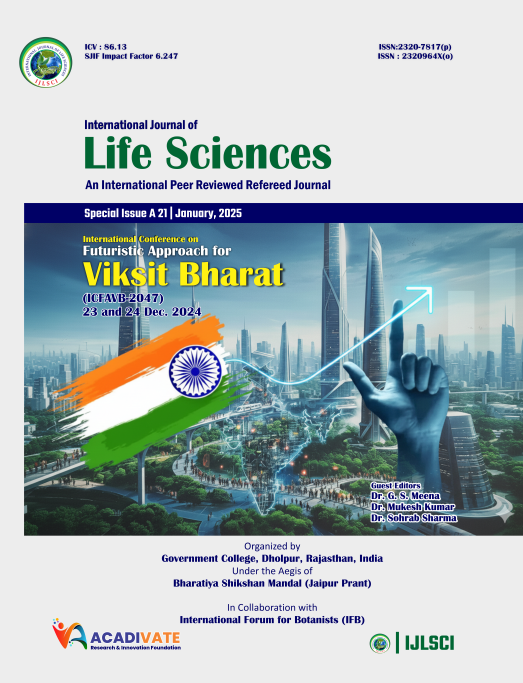
Downloads
Published
How to Cite
Issue
Section
License
Copyright (c) 2025 Author

This work is licensed under a Creative Commons Attribution-NonCommercial-NoDerivatives 4.0 International License.
Open Access This article is licensed under a Creative Commons Attribution 4.0 International License, which permits use, sharing, adaptation, distribution and reproduction in any medium or format, as long as you give appropriate credit to the original author(s) and the source, provide a link to the Creative Commons license, and indicate if changes were made. The images or other third party material in this article are included in the article’s Creative Commons license unless indicated otherwise in a credit line to the material. If the material is not included in the article’s Creative Commons license and your intended use is not permitted by statutory regulation or exceeds the permitted use, you will need to obtain permission directly from the copyright holder. To view a copy of this license, visit http://creativecommons.org/ licenses/by/4.0/
















